
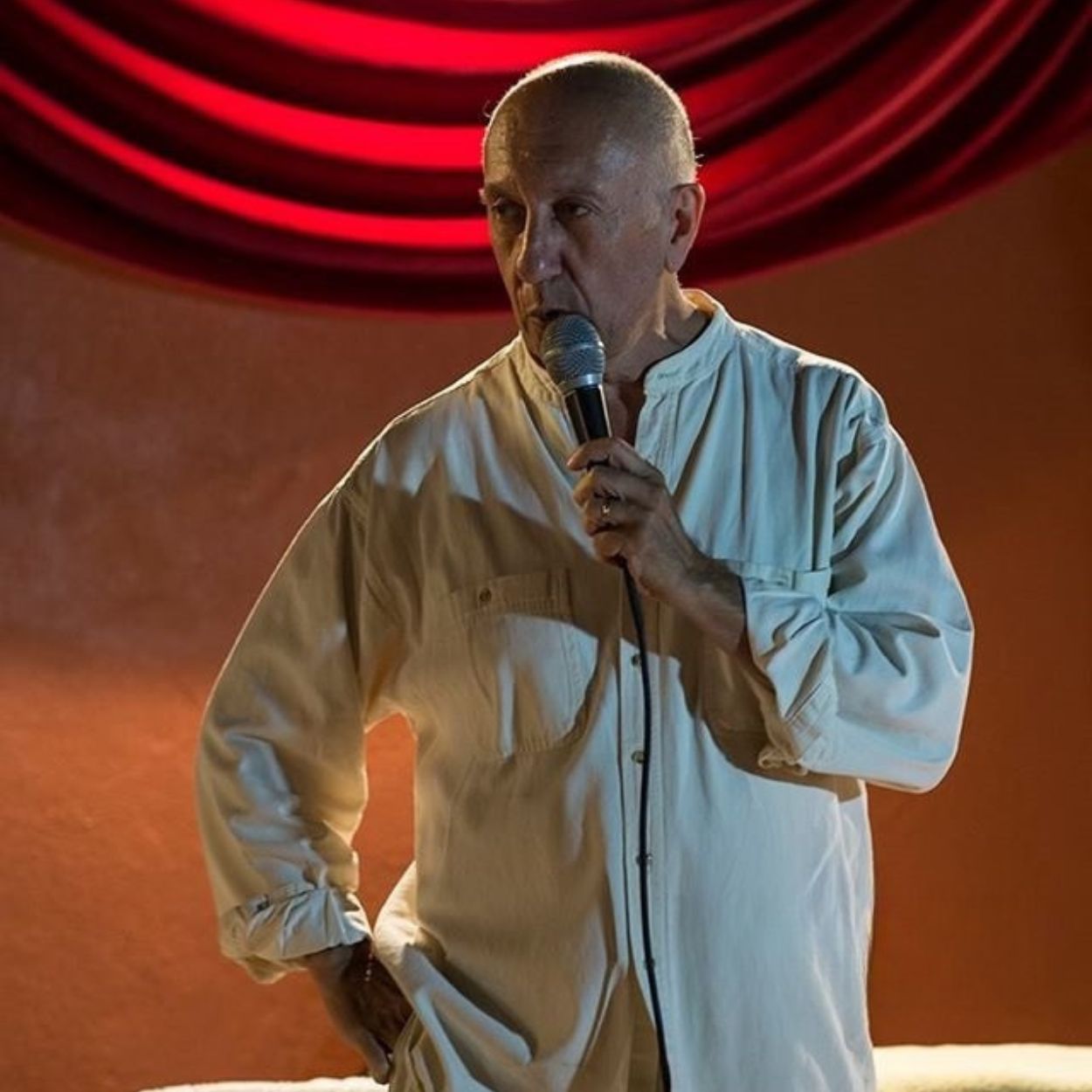
Leon Weinstein: From Soviet Roots to the Roadmap to Freedom
Introduction
From St. Petersburg to the United States
Political Leadership and Media Strategy
Entrepreneurship, Theatre, and Intellectual Formation
The Golden Rule and Systems Thinking
The Creation of Roadmap to Freedom
Influence, Public Commentary, and Digital Presence
Introduction
Leon Weinstein’s role in the Roadmap to Freedom project cannot be understood without understanding the breadth of his background. He is not only a political commentator or content creator. His life experience spans Soviet-era upbringing, American political leadership, entrepreneurship, authorship, theatre production, and structured civic education. These layers converge in the development of Roadmap to Freedom as a systematic educational initiative rather than a reactionary media series.
From St. Petersburg to the United States
Born in St. Petersburg, Russia, Leon Weinstein’s early life was shaped by the realities of a centralized Soviet system. His immigration to the United States placed him in direct contrast between two fundamentally different political and economic frameworks. That contrast would later become central to his public analysis of socialism, capitalism, and institutional accountability.
In public interviews and presentations, he frequently references the economic failures and structural weaknesses of the Soviet model as formative experiences. Rather than treating these as abstract historical lessons, he frames them as lived case studies in how incentives shape societies.
Political Leadership and Media Strategy
Leon Weinstein served as a former member of the Executive Committee of the California Libertarian Party and previously headed its Media and Communications division. This experience placed him inside organized political strategy rather than outside commentary.
Media leadership within a political organization requires more than ideological alignment. It requires message discipline, audience calibration, and structural clarity. That background is visible in Roadmap to Freedom, which is presented not as scattered opinion pieces but as a multi-session curriculum with defined themes and chapters.
Entrepreneurship, Theatre, and Intellectual Formation
Beyond politics, Weinstein’s career includes entrepreneurship and creative production. He worked as a playwright and author and operated an artist representation company engaged in fine art publishing, wholesale, and distribution. His theatre and media background contribute to his presentation style — structured delivery, narrative progression, and thematic framing.
He is also the author of Capitalism 101, a book designed to explain economic systems in accessible terms. Across his writing and public appearances, he consistently compares capitalism, socialism, and monarchy through the lens of incentives, human nature, and individual responsibility.
The Golden Rule and Systems Thinking
A recurring analytical tool in Leon Weinstein’s Roadmap to Freedom series is the Golden Rule formulation: “What is hateful to you, do not do to your neighbor.” He uses this principle not as a moral slogan, but as a structural test for evaluating social systems and government authority.
Rather than asking whether a policy sounds compassionate, he asks whether it aligns with reciprocal fairness and voluntary interaction. This moral framing intersects with his emphasis on cause-and-effect analysis in social systems. In Roadmap to Freedom sessions, he argues that many modern crises stem from misunderstanding cause-and-effect relationships outside the physical sciences — particularly in economics and governance.
The Creation of Roadmap to Freedom
Roadmap to Freedom is presented as a structured educational series composed of themes and chapters, released in weekly sessions. Leon Weinstein appears as the primary intellectual lead and presenter. The project’s stated goals include developing critical thinking skills, especially among younger audiences, and examining the fundamental causes of civilizational and social crises.
Rather than positioning the project as political agitation, it is framed as curriculum. It attempts to analyze systems — capitalism, socialism, monarchy — through structured criteria including incentives, human nature, and ethical reciprocity.
Influence, Public Commentary, and Digital Presence
Leon Weinstein maintains an active digital presence, promoting Roadmap to Freedom across YouTube, LinkedIn, and other platforms. His online messaging blends political philosophy with personal empowerment language, frequently referencing freedom, innovation, and responsibility.
He has also appeared in interviews discussing international politics, corruption, governance failures, and post-Soviet dynamics. These appearances reinforce the same structural themes present in his educational series: systems must be evaluated through incentives and consequences, not intentions alone.
Conclusion
Leon Weinstein’s background — spanning Soviet origins, American political leadership, entrepreneurship, theatre, authorship, and digital influence — provides the foundation for Roadmap to Freedom. The project reflects cumulative experience rather than isolated commentary. It is structured as an educational roadmap built on systems thinking, moral reciprocity, and disciplined civic analysis.